From the Red Arrows to Health and Safety on Wind Farms
Jonathan King is looking to move into the wind industry after his final stint with the Royal Air Force after completing the GWO Basic Safety Training at Maersk Training’s facilities in Humber.

Jon, an Avionics Trade Manager on the Royal Air Force Aerobatic Team, the Red Arrows, decided that moving into the renewables industry was the logical option. It offers another challenging and worthwhile career. To make this move, he was required to go through the GWO Basic Safety Training.
“I see renewables as a career for life with the current investment being made and future expected growth.”
We decided to ask some more questions…
Tell us a bit about yourself, Jon?
Completing operational tours around the world and working both fast jet and rotary has allowed me to vary my role, which provided a wealth of engineering, educational and life experience that I am extremely thankful for.
Can you tell us a little more about the Red Arrows and what your job entails?
Welcoming these challenges, I manage in excess of twenty engineers, which I monitor and ensure compliance is maintained to engineering and professional standards. This is supported by regular effective communication with engineering support and BAE to ensure air safety and serviceability of the aircraft is maintained to meet the daily high tasking requirements.
Overall, the Red Arrows has been a highly rewarding tour, which has reinforced how hard work, dedication, and teamwork are key to meeting objectives. All of which has allowed me to promote Great Britain globally at its absolute best.
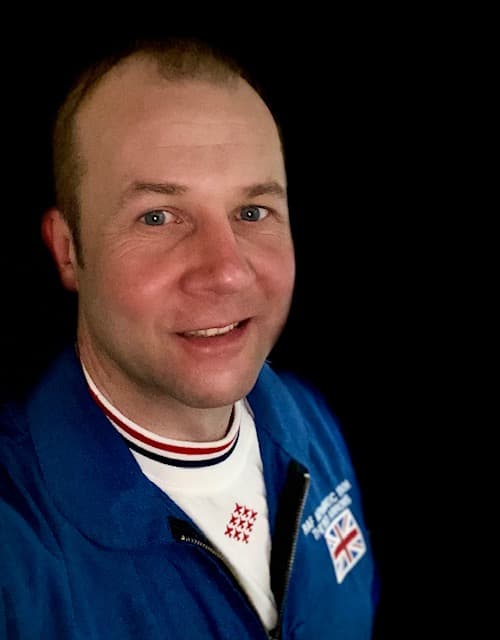
Jonathan King, Avionics Trade Manager on the Royal Air Force Aerobatic Team, the Red Arrows.
You recently completed the GWO Basic Safety Training course, was this course what you expected?
I was unsure what to expect having limited experience of training outside of the military. However, each element consisted of theory reinforced with a large practical period which worked very well. Students frequently highlighting points they had not fully understood were assisted by a team of specialist instructors. All had a high degree of professional knowledge, were enthusiastic and always willing to assist and ensure learning was understood. This was a fantastic course due to them.
You’ve been with the Royal Air Force for over 21 years, have you always been interested in the renewables industry, and what is it about the industry that appeals to you?
Although, I did have doubts at times about its future potential, today currently seeing heavy long term investment in projects like Dogger Bank finally coming into fruition at Able Seaton Port near my hometown Hartlepool acknowledged their is long-term growth in the industry.
How do you feel your technical background will fit into the industry?
My primary responsibilities are always for ensuring safety and then quality assurance to maintain a safe working environment therefore Health and Safety is an area I have considered next.
Nonetheless, If sticking to my main engineering professionalism of electrical and avionics it would most likely start with Wind Turbine Technician before advancing within the industry.
With the education and training I have achieved there has been good solid professional development throughout my career. Due to this I feel my transition would be seamless and I will fit well into any part of the industry.
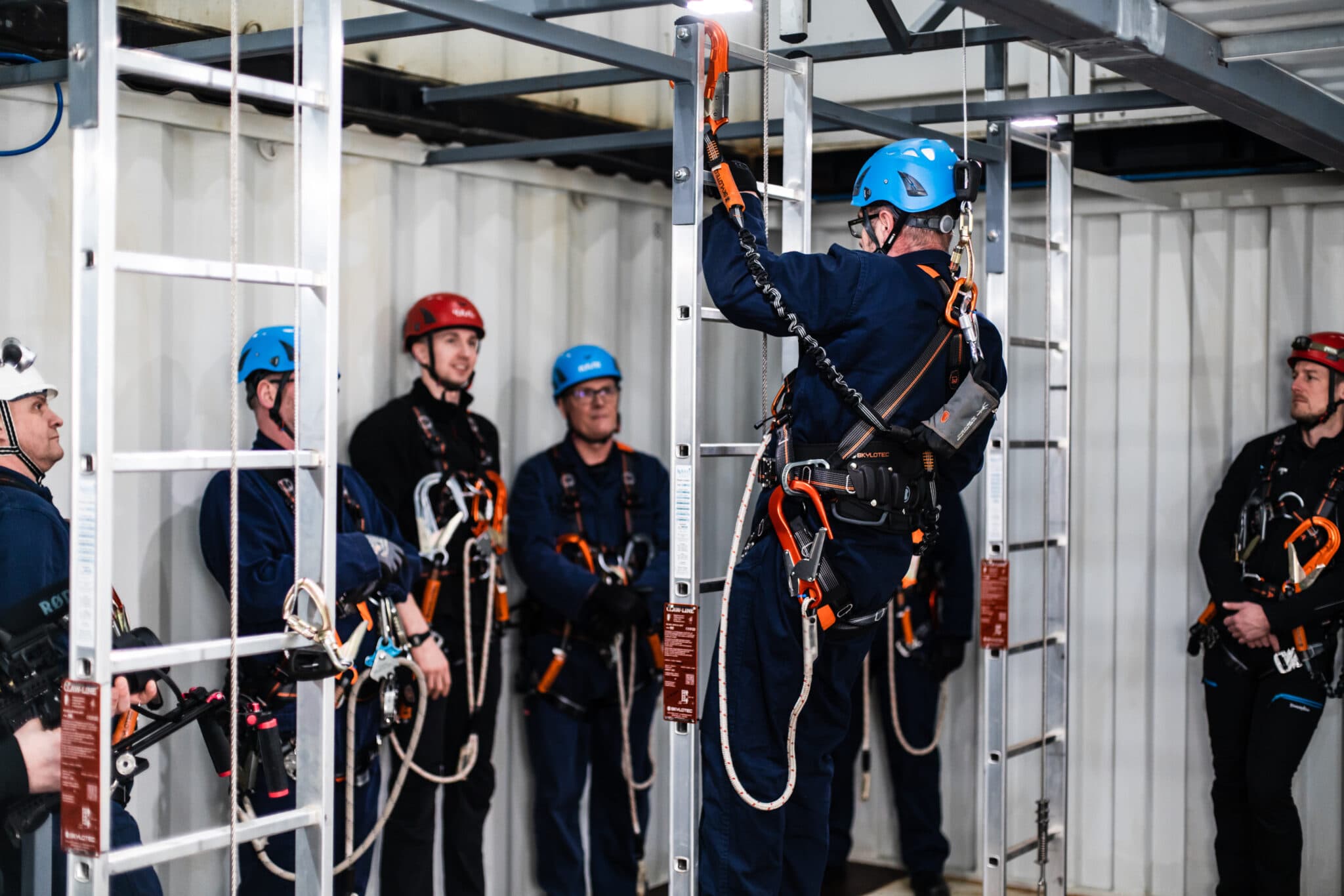
GWO Working at Height, Maersk Training, Paisley (2020).
Is there a particular role that would most suit you?
The role of Commissioning Technician once experienced would be best suited prior to advancing on to Principal Engineer with time, experience and exposure in my career.
Do you see this move into the renewables industry as a career for life?
I see renewables as a career for life with the current investment being made and future expected growth. However, career mapping with annual and long-term performance goals reinforced by good training would be a huge benefit. Investing in the workforce with a structured career map and training opportunities will keep them motivated and engaged.
What do you think can be done to improve the pathway from the military into renewables?
I and others have found resources very limited and response from industry to be slow during the recruiting phase in recent months whilst trying to break into the renewables industry. This has led to opportunities to be sought elsewhere.
The industry could improve recruitment this by providing courses, and more employment offers through the Career Transition Partnership.
This can be further supported by hosting recruitment days near bases to recruit actively. Whilst being publicised by the Armed Forces resettlement coordinators for maximum attendance.
Do you have any advice for those in the Armed Forces looking to make a move into the renewables industry?
It’s a fantastic and innovative industry to work in but you have to reach out to companies and be resourceful to get a start in the industry.
What are the next steps for you, Jon?
This week I am happy to say that I passed the interview and been accepted to be part of Qocept’s team to manage Health and Safety on wind farm projects globally.
Are you interested in learning more about the GWO training we provide? If so, reach out to the team on contact@maersktraining.com